
Astronomy Outreach with a Laser: How Clubs and Guides Run a Star Tour
A green laser turns an outreach evening into a guided star tour. How astronomy clubs and dark-sky guides plan the session, which objects to show through the year and how to keep everyone safe.
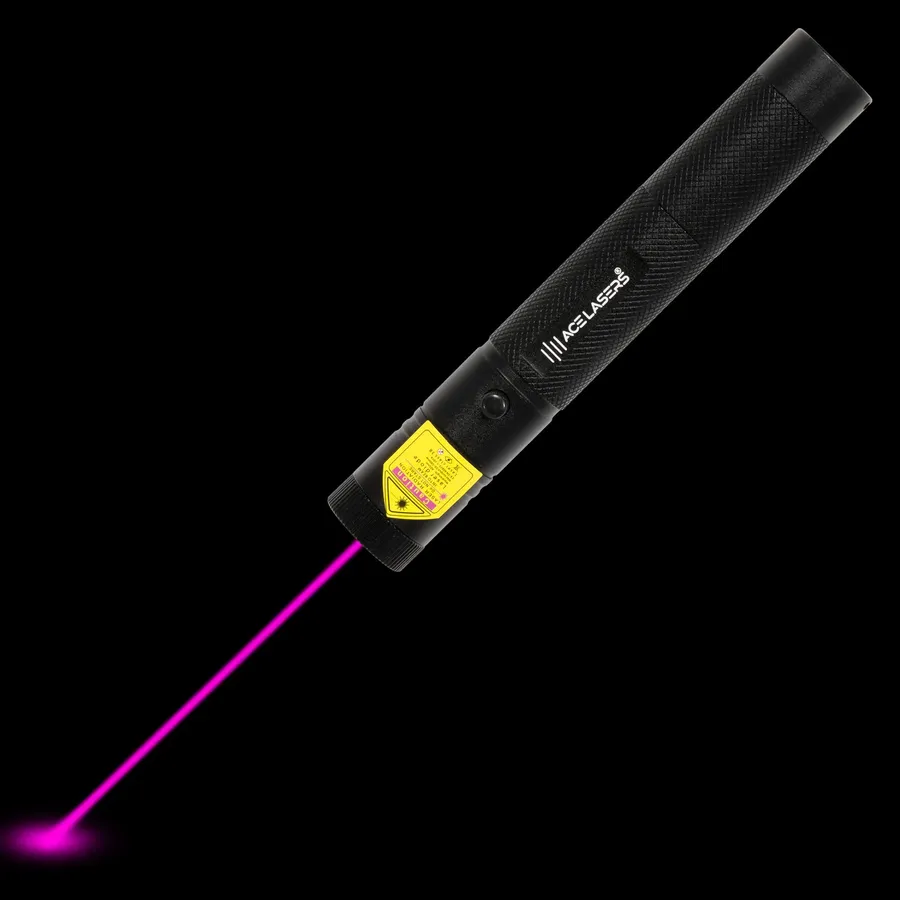
Ask a group of newcomers to find "the bright star below the W of Cassiopeia" and half of them will be looking at the wrong part of the sky. A green star laser pointer changes that: on a dark night its beam appears to reach out and touch the star you mean. For astronomy clubs, outreach volunteers and dark-sky guides it is one of the most useful tools there is, provided it is used with discipline. This guide walks through a complete session.
Choosing the laser
Green is the only sensible colour for star pointing: the beam is visible at night and the eye sees green best in the dark. Under a properly dark sky a pen-style laser of 5–50 mW, such as the AG-1, shows a clear beam for groups of all sizes. A Pro model of 50–500 mW is brighter and may be preferred by experienced guides at large public events or under light-polluted skies, but it brings a higher hazard. Choose the lowest power that works for your sky and your group. More on this on our astronomy page.
Before the evening
- Check your location. Do not use a laser near airports or under approach and departure routes. Know your local airspace and pick a site away from them.
- Agree the club rules. Who may use the laser, where it is stored, and that it is never handed to members of the public or children.
- Plan your tour. Choose five to eight objects in a logical sequence across the sky. Have a backup plan for partial cloud.
- Power. Fresh AAA batteries or charged lithium-ion cells, plus a spare in an inside pocket: cold nights drain batteries fast.
- Kit. Red-light torch, laser in a fixed pocket, goggles rated for 532 nm for set-up and testing, binoculars or telescopes.
At the start: the briefing
Take one minute at the start to explain the rules to the group. Only the guide uses the laser. Nobody looks towards the laser or into the beam. When an aircraft or helicopter appears, the guide switches off and everyone waits. People stay behind or beside the guide, not in front. A short, calm briefing reassures the group and sets the tone.
How to point
- Check the sky for aircraft lights, helicopters and drones.
- Raise your arm and point high before you switch on. Never switch on at eye level.
- Use short bursts: point, name, switch off. A continuous beam distracts and increases risk.
- Move from one bright, easy object to the next, then to fainter targets using the bright ones as signposts ("star hopping").
- Keep the beam well above the horizon, trees, buildings and the edges of the group.
- Never shine a laser through binoculars or a telescope, and never towards someone at an eyepiece.
What to show through the year (UK skies)
Autumn
Early in the evening the Summer Triangle of Vega, Deneb and Altair still dominates the western sky. Overhead, the W-shape of Cassiopeia leads to the Great Square of Pegasus. From the corner star Alpheratz, hop along the chain of Andromeda to find the faint smudge of the Andromeda Galaxy, the most distant object most people can see with the naked eye. Later, the Pleiades cluster rises in the east: point it out, then let people look through binoculars.
Winter
Orion is the star of the winter sky. Follow his three belt stars down to Sirius, the brightest star in the night sky, and up to the orange Aldebaran in Taurus and on to the Pleiades. Betelgeuse and Rigel show colour differences between stars; Orion's Nebula below the belt is a favourite for binoculars.
Spring
The Plough stands high. Use its two "pointer" stars, Merak and Dubhe, to find Polaris, the Pole Star. Follow the curve of the Plough's handle to the orange Arcturus ("arc to Arcturus") and on to Spica. Leo, with the sickle shape around Regulus, is another easy pattern.
Summer
Short nights in the UK limit the time for star tours, but the Summer Triangle returns, with the Milky Way running through Cygnus under dark skies. Late-summer evenings are the best time for public events with comfortable temperatures.
Planets, the Moon and meteor showers make excellent additions, but check their positions for the date of your event.
Working with telescopes
A laser and telescopes complement each other. Point out a target with the laser, explain what it is, then invite people to the eyepiece. Never look along or shine a laser through optical instruments, and keep the laser switched off near the eyepiece queue.
Safety: the non-negotiables
- Never aim at or near aircraft, helicopters or drones. If one appears, switch off and wait until it is well clear.
- Never aim at people, the eyes of animals or vehicles.
- Never lower the beam towards the horizon, buildings or the group.
- Keep the laser in the guide's pocket between uses, not on a table.
- Store club lasers locked, with the safety key removed where fitted, and keep them away from children.
Goggles rated for 532 nm are recommended during set-up and testing; read our laser safety glasses guide. ACE lasers are sold to adults 18+ and businesses, and as the buyer you are responsible for complying with UK law. Our laser safety guide contains further advice.
After the session
Count the lasers back in, switch them off, remove keys or batteries and store them. Note which objects went down well and which were hard to find: next time your tour will flow even better.
Summary
A green laser makes a stargazing session clearer, more engaging and easier to follow. Choose the lowest power that works under your sky, brief the group, point high in short bursts and stop for every aircraft. The AG-1 green laser pen is the usual starting point for clubs; spare cells and chargers are in our accessories.
More articles
Blog
The Most Powerful Laser Pointer? What Milliwatts and Laser Classes Really Mean
Searching for the most powerful laser pointer? Before you compare milliwatts, learn what the number means, how…
Laser Safety Glasses: How to Choose Goggles for a Class 3B Laser Pointer
Laser safety glasses are essential with a class 3B laser. Learn how wavelength ratings and optical density wor…
Laser Bird Deterrent on Farms: Planning a Routine Through the Seasons
How farmers and land managers use a green laser as a bird deterrent across large areas: species, timing throug…