
Laser Safety Glasses: How to Choose Goggles for a Class 3B Laser Pointer
Laser safety glasses are essential with a class 3B laser. Learn how wavelength ratings and optical density work, why "green laser glasses" are not always protective, and how to wear them properly.
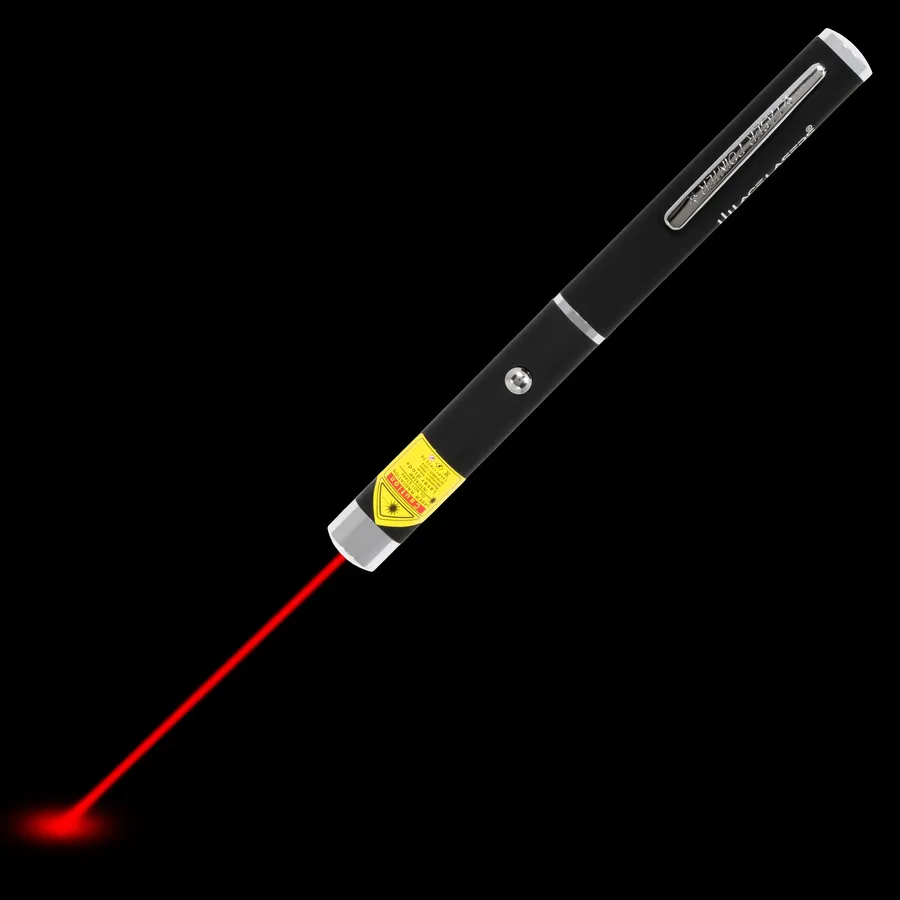
If you use a class 3B laser, laser safety glasses are not an optional extra. They protect your eyes during set-up, during demonstrations and against the reflection you did not expect from a puddle, a window or a metal gate. Yet choosing them is confusing: there are glasses that protect and glasses that only make a laser look brighter, ratings for one colour that do nothing for another, and numbers such as OD 4+ that are rarely explained. This guide sets out what to look for.
Why safety glasses matter with a class 3B laser
With a class 2 pointer (below 1 mW) the natural blink reflex normally protects the eye from brief accidental exposure. With class 3B that is no longer true. Our ACE lasers range from 5 to 500 mW, and at these levels the direct beam or a mirror-like reflection can damage the retina in less time than it takes to blink. The damage is often painless and may be permanent.
The main protection is behaviour: never aim at people, animals, vehicles or aircraft, and keep reflective surfaces out of the beam path. Goggles are the second line of defence for the moments when something goes wrong.
1. Match the wavelength
Laser safety glasses work by absorbing or reflecting a specific range of wavelengths. A filter that blocks green light at 532 nm can be almost transparent to violet at 405 nm. Always check that the glasses are rated for the wavelength of your laser:
- Green ACE lasers (AGP-3 Pro, AG-1 and others): 532 nm.
- Violet ACE lasers (AVP-1 Pro, AV-1, VEX-1000 Pro): 405 nm.
- Red ACE lasers (ARP-1 Pro, ARP-2 Pro Mini, AR-1): 650 nm.
Some glasses cover several wavelength ranges. If you own lasers in more than one colour, check every wavelength against the marking on the frame or filter.
2. Understand optical density (OD)
Optical density describes how strongly the filter attenuates the laser light at the rated wavelength. Each step is a factor of ten: OD 1 lets through one tenth of the light, OD 2 one hundredth, OD 3 one thousandth, and so on. Higher OD means more protection at that wavelength. For high-power class 3B lasers, eyewear suppliers generally recommend a substantially higher OD than for low-power lasers; ask the supplier which OD is appropriate for the maximum output of your laser.
A higher OD also usually means a darker filter at that colour. With green-blocking glasses the green dot will look faint or invisible when you wear them. That is the point: if you can still see a bright dot through the glasses, check that they are really rated for your laser.
3. Check the markings
Proper laser protective eyewear is marked with the wavelength range and the protection level. In the UK and Europe, laser protection eyewear is commonly tested and marked to EN 207. Be cautious with glasses that state only a colour ("for green lasers") without a wavelength and a protection rating. If there is no marking, assume there is no protection.
Beware: "green laser glasses" that do not protect
If you search for green laser glasses, many results are laser enhancement glasses, made to make the line of a green laser level easier to see on a building site. They are tinted to let green light through and darken everything else. They do not protect your eyes against a laser beam; some even make it easier for green light to reach the eye compared with the surroundings. The same applies to ordinary sunglasses. Only eyewear rated and marked for laser protection at your wavelength counts.
4. Fit and coverage
- Choose goggles or glasses with side protection; reflections often come from the side.
- If you wear prescription glasses, choose an over-glasses model that fits comfortably over them.
- Make sure the frame sits closely without gaps at the top and sides.
- Comfort matters: glasses that are uncomfortable end up on the dashboard instead of on your face.
5. When to wear them
- When inserting batteries, testing or adjusting the laser.
- During demonstrations, when people or reflective objects are nearby.
- When working near water, glass, vehicles or metal structures.
- For anyone standing close to the operator during bird-control work.
An important caveat for astronomy: with laser protective glasses on, you will not see your own green beam on the sky. Guides therefore rely mostly on strict procedures: the beam is only switched on pointing high into the sky, away from the group, and never lowered towards the horizon. Wear the glasses during set-up and whenever the beam could come near anyone's eye level. See our astronomy page for a full routine.
6. Look after them
Scratches, cracks and heat can reduce the protective effect of a filter. Store the glasses in a case, clean them as the manufacturer recommends and replace them if the filter is damaged. Keep one pair with each laser, so they are always at hand when the laser is.
Goggles are not a licence
Laser safety glasses reduce the risk to the wearer. They do nothing for the person on the other side of the field, the driver on the road behind the hedge or the pilot overhead. The basic rules always apply: never aim at people, the eyes of animals, vehicles or aircraft; keep the beam low for bird control and high for astronomy; keep the laser away from children; and store it securely. ACE lasers are sold to adults 18+ and businesses, and as the buyer you are responsible for complying with UK law.
Quick checklist
- Wavelength on the marking matches your laser (532 nm green, 650 nm red, 405 nm violet).
- Protection level suitable for the maximum output of your laser; ask the supplier.
- Marked as laser protective eyewear (for example to EN 207), not "enhancement" glasses.
- Side protection and a good fit, also over prescription glasses.
- Undamaged filter, stored in a case, one pair per laser.
More safety advice is in our laser safety guide. For background on output levels, read what milliwatts and laser classes mean.
More articles
Blog
The Most Powerful Laser Pointer? What Milliwatts and Laser Classes Really Mean
Searching for the most powerful laser pointer? Before you compare milliwatts, learn what the number means, how…
Laser Bird Deterrent on Farms: Planning a Routine Through the Seasons
How farmers and land managers use a green laser as a bird deterrent across large areas: species, timing throug…
High-Power Laser Range: How Far Green, Red and Violet 5–500 mW Lasers Reach
How far a high-power laser reaches depends on output, colour and conditions. We compare green, red and violet…