
Laser Bird Deterrent on Farms: Planning a Routine Through the Seasons
How farmers and land managers use a green laser as a bird deterrent across large areas: species, timing through the year, a safe operating routine and record keeping.
Birds cost farms money: geese graze winter cereals and grass to the ground, pigeons strip brassicas and oilseed rape, crows and rooks pull up freshly drilled seed and starlings foul feed and silage in their thousands. Traditional deterrents such as gas cannons, kites and scarecrows all have a place, but birds get used to them and neighbours do not always appreciate the noise. A green laser adds a silent, precise tool. This article explains how to build it into a routine that works across a whole season on a large area, without compromising safety.
Why a laser works as a bird deterrent
A bright dot that moves steadily towards a flock is perceived as an approaching threat. Birds take off and, when the experience is repeated, begin to avoid the area. Because you control exactly where the dot goes, you can move one flock without disturbing livestock in the next field, and you can work at the times of day when birds arrive to feed or roost: dusk and dawn. In low light the effect is strongest, which is why many farmers concentrate their sessions on the first and last hour of daylight.
Choosing the right laser for large areas
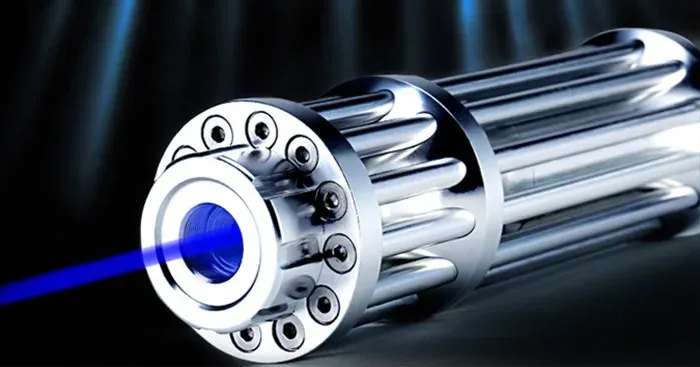
Choose green: it gives the longest visible range for a given output. For large fields, the reserve of a Pro laser makes the difference, particularly in the brighter conditions of early morning:
| Model | Output | Daylight | Dusk | Best for |
|---|---|---|---|---|
| AGP-3 Pro | 50–500 mW | approx. 500 m | approx. 2 km | Large fields, all-round |
| AGP-2 Pro Mini | 50–500 mW | approx. 500 m | approx. 2 km | Carrying on foot all day |
| AG-1 | 5–50 mW | approx. 200 m | approx. 1 km | Farmyards, smaller fields, dusk |
Many farms keep one Pro laser for the fields and a pen-style laser for the yard. Spare cells (18650 or 16340) prevent a session from ending halfway on a cold morning.
A season on a typical mixed farm
Autumn: drilling and arriving geese
Crows, rooks and pigeons follow the drill and target freshly sown cereals. Short laser sessions at first light, when the birds arrive, combined with regular field visits, help protect emergence. Migratory geese begin to arrive on grassland and stubble; moving them on early, before a flock settles into a routine, is far easier than shifting an established flock later.
Winter: geese on grass and cereals
Large goose flocks can graze winter crops hard. They typically fly in at dawn and leave at dusk to roost on water. Work the fields at dawn, approaching the flock with the dot on the ground from a position where the background is open land. Be extra careful near water: the roost itself is often a pond or lake, and water reflects laser light. Never aim across a water surface.
Spring: pigeons and crops
Pigeons hit oilseed rape and spring-sown crops. Combine the laser with changing the position of other deterrents, so the birds encounter something new each day. Spring is also the start of the nesting season: concentrate on moving feeding flocks and avoid disturbing nesting birds. Check which rules apply to the species on your land.
Summer: starlings and yards
Starlings gather in large numbers around cattle sheds, feed stores and silage clamps, particularly at dusk. A laser can move them on before they settle. Work only outside, with the beam pointed away from buildings with windows, from roofs that reflect, and from any person or animal.
A safe operating routine
- Map each field. Note roads, houses, footpaths and public rights of way, power lines, water and livestock. Mark the directions in which you will never point.
- One trained operator. Decide who uses the laser. Others stay behind the operator.
- Position before you switch on. Walk or drive to a spot where the background behind the flock is open ground, a slope or a hedge bank.
- Low and slow. Start the dot on the ground well in front of the flock and move it steadily towards them. Never aim at the birds themselves and never upwards or towards the horizon.
- Stop when anything changes. A walker on a path, a vehicle on a lane, an aircraft or a helicopter overhead: switch off and wait.
- Short sessions. Two to five minutes per flock is usually enough; repeat over several days.
- Store securely. Keys removed, laser locked away, out of reach of children.
Wear goggles rated for 532 nm, particularly near water, glass and metal. Our laser safety glasses guide explains how to choose them.
Keep records
A simple log helps you see what works: date, time, field, species, approximate number, response and weather. After a few weeks patterns appear. You will see which fields need daily attention, at what time the birds arrive and whether a flock is becoming used to the laser. Records are also useful if neighbours or a landlord ask how you manage birds.
Combine methods
No single deterrent works forever. The laser is most effective as part of a mix: visual deterrents that are moved regularly, scaring patrols, crop management and, where appropriate, other methods. Variety prevents habituation. Use the laser to reinforce the message at the critical times of day.
Large sites beyond the farm
Some customers manage birds on other large areas such as reservoirs, sports grounds, solar parks or airfield perimeters. On such sites, laser use is only appropriate with the explicit permission and procedures of the site operator, and never in any direction where aircraft, vehicles or people could be reached. Respect the nesting season, the rules that apply to the species, and the landowner's wishes. As the buyer you are responsible for complying with UK law.
Summary
A green laser is a silent, precise bird deterrent that works best at dawn and dusk. For large areas the AGP-3 Pro gives the reach you need; for yards and dusk work the AG-1 is often enough. Plan by season, keep the beam low, stop when anything changes and keep records. Read the basics on our laser bird scarer page and our laser safety guide.
More articles
Blog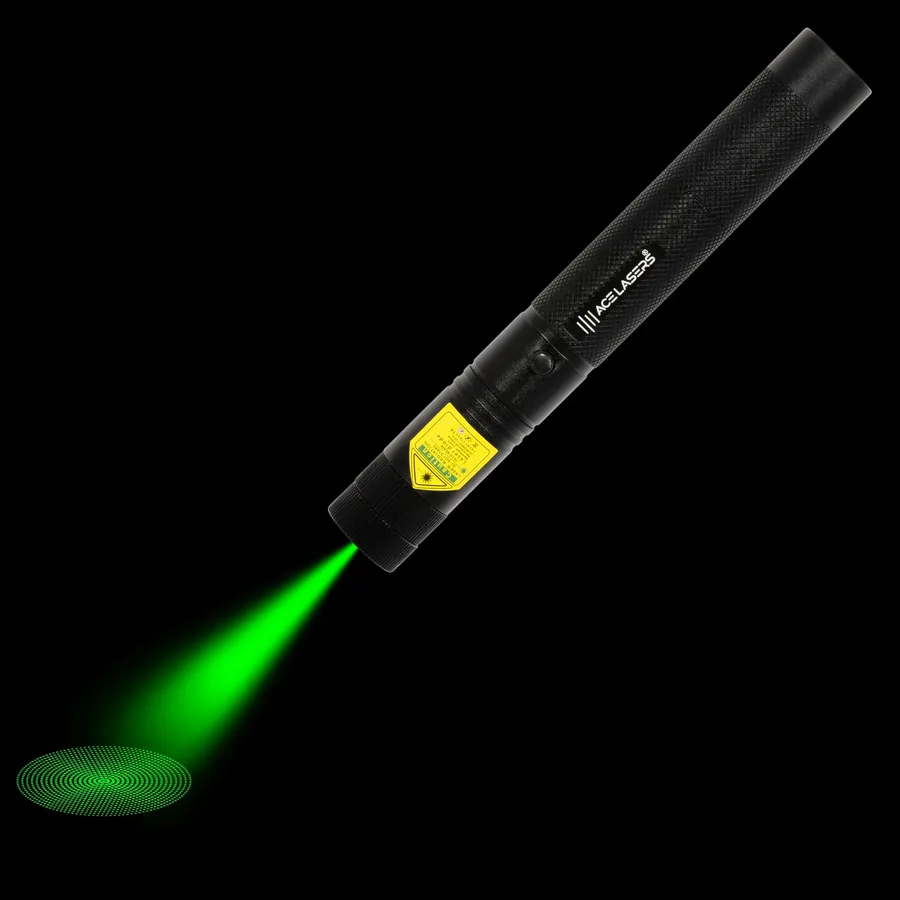
The Most Powerful Laser Pointer? What Milliwatts and Laser Classes Really Mean
Searching for the most powerful laser pointer? Before you compare milliwatts, learn what the number means, how…
Laser Safety Glasses: How to Choose Goggles for a Class 3B Laser Pointer
Laser safety glasses are essential with a class 3B laser. Learn how wavelength ratings and optical density wor…
High-Power Laser Range: How Far Green, Red and Violet 5–500 mW Lasers Reach
How far a high-power laser reaches depends on output, colour and conditions. We compare green, red and violet…